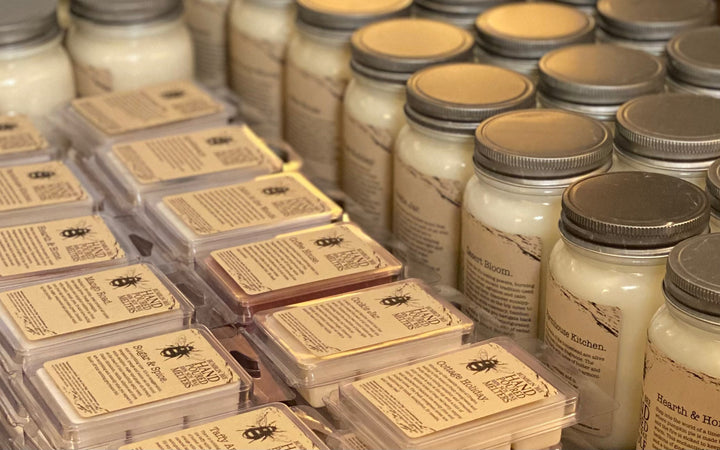
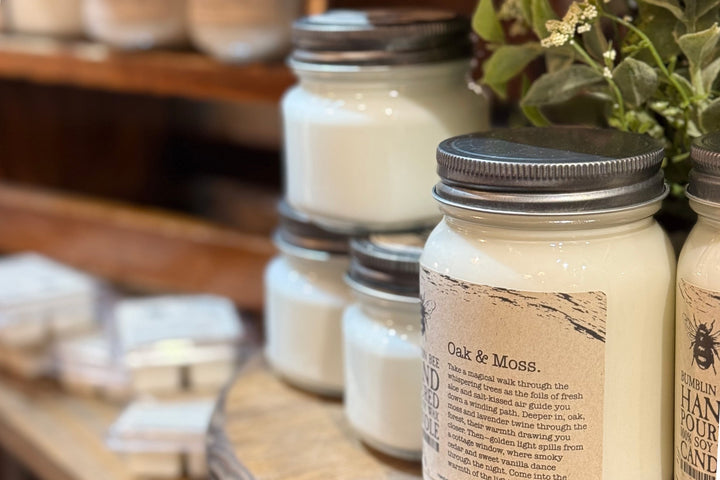
Most people start a candle business thinking about scent development, packaging, branding, and photography. Then the first holiday rush hits and suddenly you're comparing shipping rates at 1AM, trying to sync inventory between markets and online orders, printing labels in bulk, and wondering why one platform wants $11 to ship a box while another wants $17 for what appears to be the exact same package.
The operational side of candle making arrives faster than most people expect.
And because candles are both fragile and heavy, the platforms you choose for selling and shipping can have a significant impact on both profitability and sanity.
Shopify: The Best Overall Online Platform
If your goal is building a serious online candle brand, Shopify remains one of the strongest ecommerce ecosystems available. Not because it's trendy, but because it's exceptionally good at turning attention into purchases.
Candles are visual products. People buy them emotionally. They're buying aesthetics, mood, atmosphere, lifestyle, and sometimes even identity. Shopify understands modern visual commerce extremely well, which is why it excels at storefront design, mobile shopping, inventory management, product organization, fulfillment workflows, abandoned cart recovery, and third-party integrations.
Perhaps more importantly, Shopify integrates extremely well with social platforms.
Social Integration Matters More Than People Realize
Many modern candle brands are discovered on Instagram, TikTok, Pinterest, and Facebook long before a customer ever visits a website.
Someone watches a pouring video, sees a cozy kitchen photo, scrolls past a shelf-styling reel, or gets pulled into a packaging video and suddenly decides they want to buy. The fewer obstacles between that moment and checkout, the better.
That's one of Shopify's biggest strengths. The entire ecosystem is designed to reduce friction between discovery and purchase, which is incredibly valuable for visual product brands.
Shopify Shipping Is Better Than Most Makers Expect
A lot of candle makers assume they need a third-party shipping platform immediately. That's not always true.
Shopify Shipping has become extremely competitive over the last several years and provides discounted USPS, UPS, DHL, and FedEx rates directly inside the platform. For many makers, shipping rates are surprisingly close to what they'll find through Pirate Ship, and sometimes they're even lower depending on package size and shipping profile.
As of this writing, the lowest shipping costs most candle makers consistently find tend to come from either Shopify Shipping or Pirate Ship—not from standing at the post office counter or purchasing labels individually through carrier websites.
Pirate Ship: The Platform Makers Recommend Constantly
At some point almost every candle maker discovers Pirate Ship.
The reason is simple: it offers discounted commercial USPS and UPS pricing without subscription fees, complicated plans, or enterprise-level requirements.
For candle makers, that matters because candles are dense, fragile, and expensive to ship inefficiently.
Pirate Ship became popular because it's easy to use, transparent about pricing, integrates with major ecommerce platforms, and often produces meaningful savings compared to retail shipping rates. The platform feels approachable for small businesses while still offering access to pricing structures that can make a real difference once order volume increases.
One of its biggest advantages is that the savings aren't hidden behind monthly fees or premium plans. What you see is generally what you get.
A Quick Note About Square
This deserves its own section because many makers start with Square.
And honestly, they should.
Square is excellent for markets, pop-ups, retail counters, inventory tracking, and in-person checkout. Historically, its biggest strength has always been brick-and-mortar commerce. If you're selling candles at events, fairs, markets, or inside a retail space, Square is incredibly easy to work with.
Where many makers get tripped up is assuming they should automatically use Square for shipping as well.
In practice, many candle makers find better shipping economics through Pirate Ship or Shopify Shipping, especially once shipping volume starts increasing. There's absolutely nothing wrong with running Square for point-of-sale operations while using a separate platform for fulfillment.
In fact, it's a very common setup.
Etsy: Still One of the Easiest Places to Start
Despite the annual predictions that Etsy is somehow dying, it remains one of the easiest ways for new candle makers to get products in front of customers.
The biggest advantage Etsy offers is built-in traffic.
People are already there looking for handmade products, gifts, home decor, and candles. That means you don't have to generate every visitor yourself, which lowers the barrier to entry considerably.
For new makers, Etsy can be a great place to validate products, test fragrance collections, gather reviews, and learn what customers respond to before investing heavily in other channels.
The limitation, of course, is that you're building on someone else's platform. You're competing alongside mass-produced products, copycats, aggressive pricing, and algorithm changes you can't control.
That's why many growing candle brands eventually move toward their own websites and focus on building direct customer relationships. Etsy works best when viewed as a launchpad rather than a permanent destination.
The Setup Many Candle Brands Eventually Land On
After a few years, many candle companies end up with a setup that looks surprisingly similar.
Shopify handles the online storefront.
Square handles in-person sales.
Pirate Ship or Shopify Shipping handles fulfillment.
Etsy provides additional marketplace exposure.
The reason this combination works is because each platform is being used for what it does best. You get strong branding, affordable shipping, social integrations, market-selling capabilities, and room to scale without forcing one platform to do everything.
Final Thoughts
Most candle businesses don't struggle because the products are bad.
They struggle because operations become overwhelming. Shipping, inventory, fulfillment, social media, events, packaging, online sales, and customer management all start colliding at the same time.
The right platforms won't solve every problem, but they can remove a tremendous amount of friction from your day-to-day operations.
And honestly, that's one of the most underrated parts of building a successful candle company.
Because when your systems stop fighting you, you finally get to spend more time doing the thing that made you start the business in the first place: creating products people genuinely want in their homes.